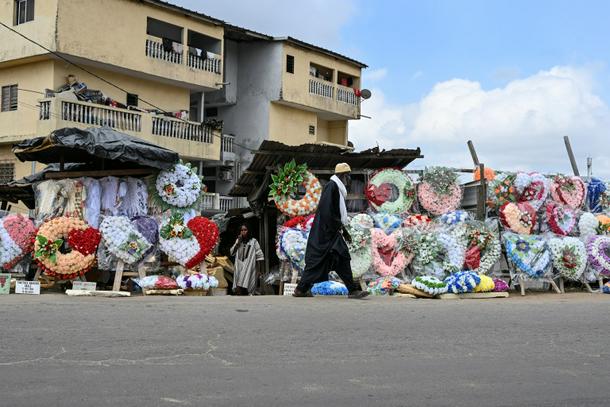
In Abidjan's working-class Yopougon neighbourhood, shops sell funeral wreaths and other articles for burials
Abidjan (AFP) - Valerie Bli Lou is a shopkeeper from a modest family, but she is determined to give her late father the sumptuous funeral that Ivorian tradition demands – whether she can afford it or not.
Dancing through the night in a flowing burgundy-and-black tunic at her father’s wake in Yopougon, a working-class neighbourhood in Ivory Coast’s economic capital, Abidjan, the 60-year-old recounted the hardships of organising and paying for this lavish tribute to his life.
Death is big business in Ivory Coast, where families are expected to say goodbye to their loved ones with massive, music-fuelled feasts tinged with moments of both joy and sadness.
Bli Lou said that including the three cows she bought, she had already paid more than 2.5 million CFA francs ($4,275) for her father’s funeral rites – more than 15 times the average monthly salary in the west African country, according to the World Bank.
There would be more expenses to come, she said: transporting the coffin to a cemetery 500 kilometres (310 miles) away, building a tomb and hosting and feeding hundreds of guests at the burial.
Bli Lou, who is Christian, told AFP she was “proud” to be covering the expense, despite the difficulty.
“My father is like my second God. I must honour him,” she said.
- Tears and dancing -
When Bli Lou’s father died in July, she did not have the money to organise a funeral in line with tradition.
So, she did what many families do: paid to preserve his body in a morgue, at the rate of about 7,000 francs a day, while she got together the funds she needed with the help of family and friends.
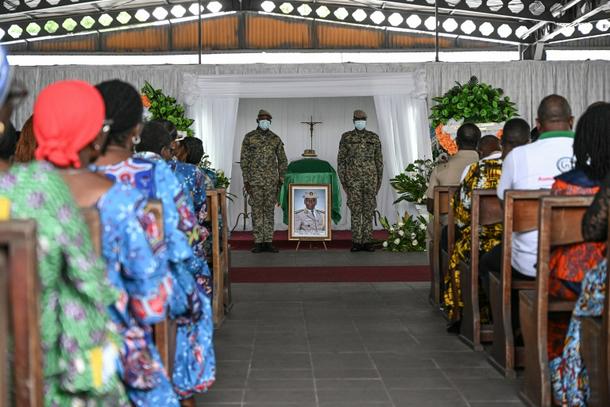
In Ivory Coast, where the average monthly salary is estimated by the World Bank at about 150,000 CFA francs ($256), organising a sumptuous funeral for a deceased relative is almost sacred
She finally managed to put together the wake at a vast centre in Yopougon known for hosting funeral events, where crowds of mourners converge every Saturday.
Families often have to reserve weeks in advance.
The centre was holding four wakes in all on the October night Bli Lou celebrated her father.
Families had hired bands, set up sprawling arrays of tents and decorated chapels with portraits of their late loved ones inside.
The feasts were a mix of tears and music, embraces and dancing.
- ‘Pressure’ -
At another wake, a DJ read out the names of those who had contributed cash or otherwise helped with the ceremony.
The family said they had paid more than five million francs in all, imposing a mandatory contribution on every relative.
Some went into debt to come up with the money.
“There’s a lot of pressure,” said one family member, Mathias Zouh.
“Our parents and grandparents did it, so we do it, too. Otherwise, it would reflect badly on you in the village.”
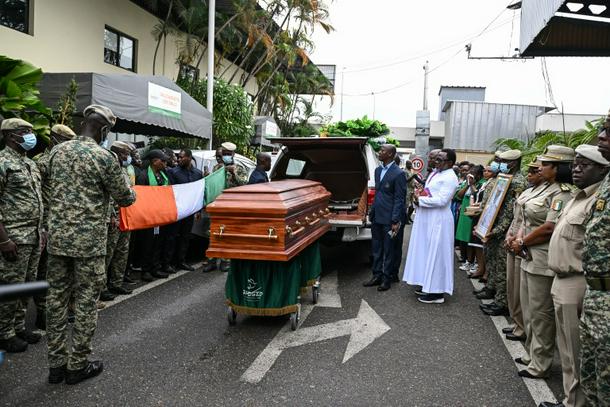
Some relatives go into debt to come up with the money for funerals
Funerals are so important in some Ivorian communities they unleash competition and rivalries between families, said anthropologist Leo Montaz, who has studied the subject.
“Everyone wants to show how important he is and reaffirm his social status,” he said.
For Muslims, Ivory Coast’s other major faith, funerals must be organised more quickly – but the multiple ceremonies involved are still often expensive.
The importance of funeral rites has given rise to a booming industry in the country.
In Yopougon, stores offer coffins, funeral clothing, artificial flowers, headstones, jewellery and scents for perfuming the dead.
Gertrude Brou has worked in the industry for 15 years, selling funeral articles and dressing the dead.
“There’s a need for funerals, and it’s a job that earns you a good living,” she said.
Her colleague Georges agreed, saying he had built his house and sent his children to study abroad thanks to his funeral parlour.
“It’s a thriving profession,” he said.