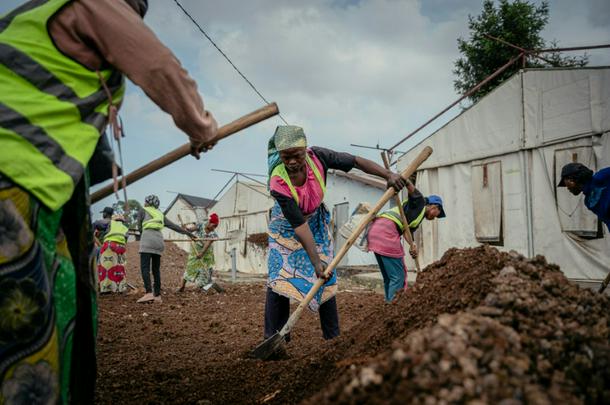
Workers are renovating an abandoned Ebola treatment centre in Goma, eastern DRC
Kinshasa (AFP) - The World Health Organization on Tuesday voiced concern about the “scale and speed” of an Ebola outbreak that has killed more than 130 people in the Democratic Republic of Congo, warning it could be lengthy.
Ebola has killed more than 15,000 people in Africa in the past half-century, and the UN health agency declared the latest surge of the highly contagious haemorrhagic fever an international health emergency.
As residents awaited medical supplies in the DRC’s conflict-torn east, aid group Doctors Without Borders (MSF) said it had tried to send the sick in Ituri province to local hospitals, but was told: “We are full of suspected cases. We don’t have any space.”
“This gives you a vision of how crazy it is right now,” said MSF aid worker Trish Newport.
No vaccine or therapeutic treatment exists for the Bundibugyo strain of Ebola, which is responsible for the outbreak – the 17th in the vast central African country of more than 100 million people.
Tonnes of emergency medical supplies, including infection prevention kits and tents, as well as experts have arrived in recent days, local WHO footage showed.
With the recent cases largely concentrated in hard-to-reach areas, few samples have been laboratory-tested and figures are based mostly on suspected cases.
Congolese Health Minister Samuel Roger Kamba told reporters on Tuesday there had been 136 deaths suspected to be linked to Ebola and about 543 suspected cases, calling for international aid to help combat the spread.
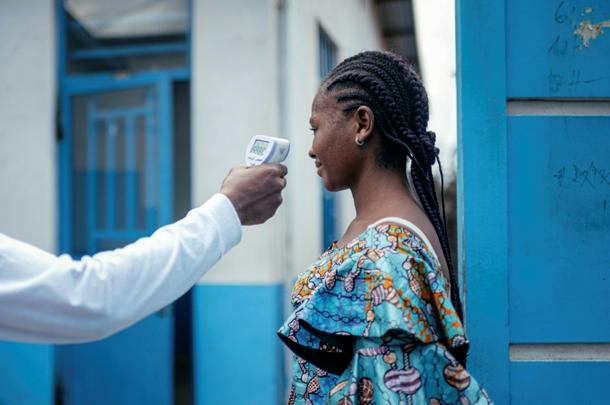
The Ebola outbreak is the 17th to hit the DRC
WHO chief Tedros Adhanom Ghebreyesus said he was “deeply concerned about the scale and speed of the epidemic”.
The agency’s representative in the DRC, Anne Ancia, said a vaccine candidate called Ervebo was being considered – but that it would likely take at least two months to be available.
“I don’t think that in two months we will be done with this outbreak,” she added.
- Conflict -
At the hospital in Rwampara in northeastern Ituri province – the epicentre of the outbreak, near the border with Uganda and South Sudan – the response was slow, despite the surge in cases.
A simple strip of plastic marked off the site reserved for receiving patients.
“We dig graves and bury people who died without gloves or any protection. We’re so exposed,” Salama Bamunoba, from a local youth organisation, told AFP.
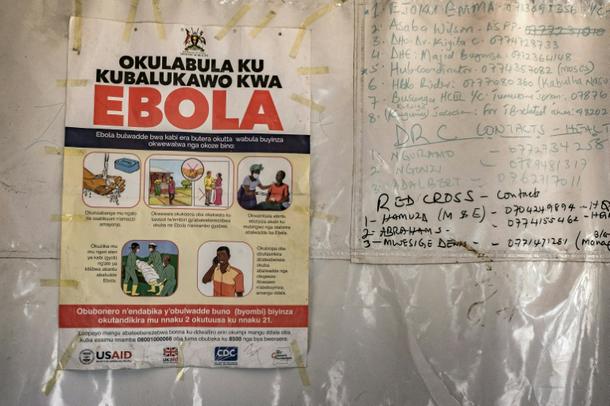
The epicentre of the new outbreak is in northeastern Ituri province on the border with Uganda and South Sudan
“We’re already at about 100 cases. We didn’t have an appropriate place to do triage and isolate suspected cases” until Monday, said one local hospital official.
The DRC’s deadliest Ebola outbreak, between 2018 and 2020, claimed nearly 2,300 lives from 3,500 cases.
The east is a gold-mining hub with people regularly crisscrossing the region, and has been plagued by clashes between local militias for years.
The virus has already spread into neighbouring provinces, as well as beyond the DRC’s borders into Uganda.
Vaccines are only available for the Zaire strain of the disease, which has caused the biggest recorded outbreaks.
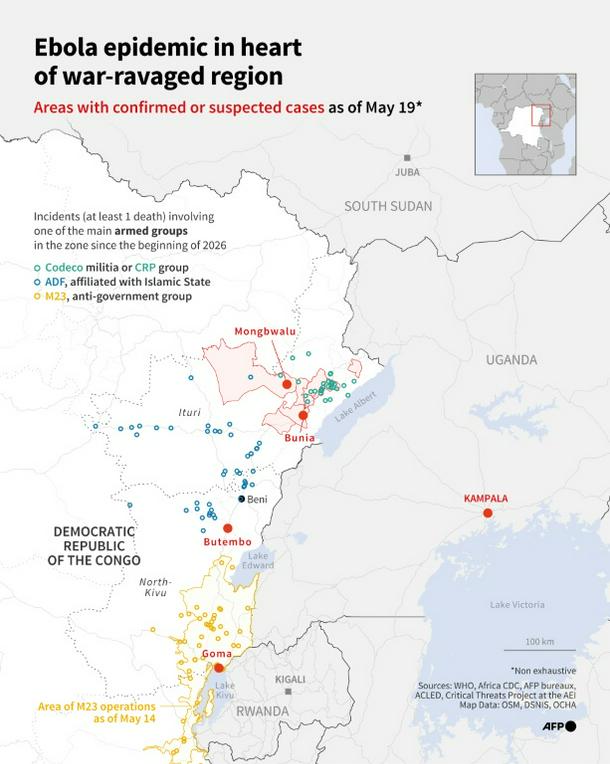
The Ebola outbreak in is conflict-hit eastern DR Congo
The Bundibugyo strain has previously been responsible for outbreaks in Uganda in 2007 and in the DRC in 2012. The mortality rate was 30 to 50 percent.
Congolese President Felix Tshisekedi urged citizens to keep “calm” and take precautions, the presidency said on X.
Suspected cases have been reported in the commercial hub of Butembo in North Kivu province, around 200 kilometres (125 miles) from the epidemic’s ground zero, Kamba said.
Another case has been recorded in Goma, the North Kivu provincial capital, which was seized by fighters from anti-government militia M23 in January last year.
Congolese doctor Denis Mukwege, who won the Nobel Peace Prize in 2018, appealed to the Rwanda-backed group to reopen the city’s airport to help combat the outbreak.
WHO chief Tedros Adhanom Ghebreyesus said he was 'deeply concerned about the scale and speed of the epidemic'
Aid organisations are struggling with a drop in international aid, particularly from the United States since President Donald Trump’s second term.
Secretary of State Marco Rubio said Washington had released $13 million in aid to combat Ebola in the DRC, after sweeping US aid cuts last year, and claimed the WHO had been “a little late” identifying the outbreak.
- US screening -
Uganda said two Ebola cases – one infection and one death – had been recorded there, involving Congolese nationals who crossed the border.
Germany meanwhile said it was readying to receive and treat a US citizen who has contracted the virus – a doctor from an American Christian NGO.
The United States announced it was screening air passengers from outbreak-hit areas and temporarily suspending visa services.
But a State Department official said Washington would allow the DRC’s national football team to travel to the United States for the World Cup.
Bahrain meanwhile announced a 30-day ban on visitors from the DRC, South Sudan and Uganda.
Trump in one of his first acts on returning to office last year set in motion a US withdrawal from the WHO, which he attacked bitterly over its response to Covid.