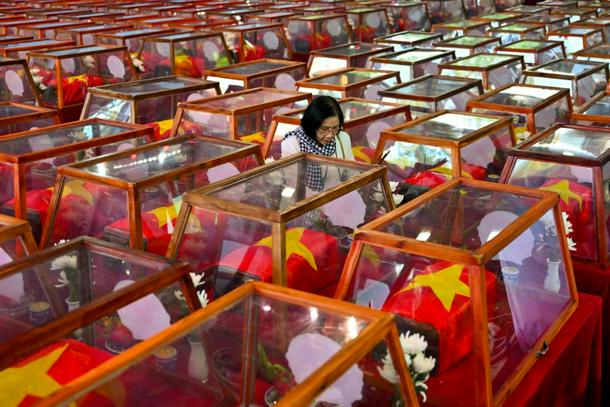
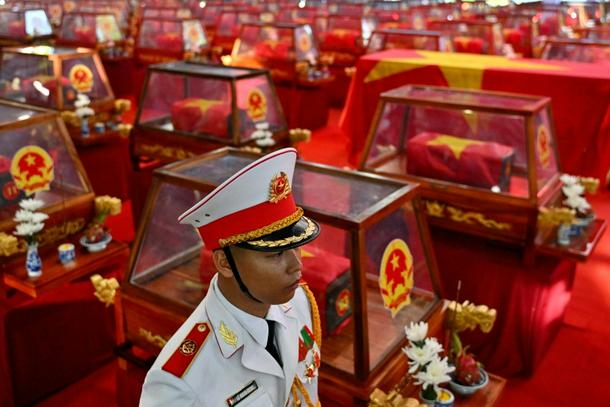
A woman stands beside caskets bearing the remains of fallen soldiers at Le Thi Rieng Park in Ho Chi Minh City
Ho Chi Minh City (AFP) - Vietnam held funeral rites for more than 700 of its war dead on Wednesday, unearthed in a major push to identify those missing from decades of conflict with France and the United States.
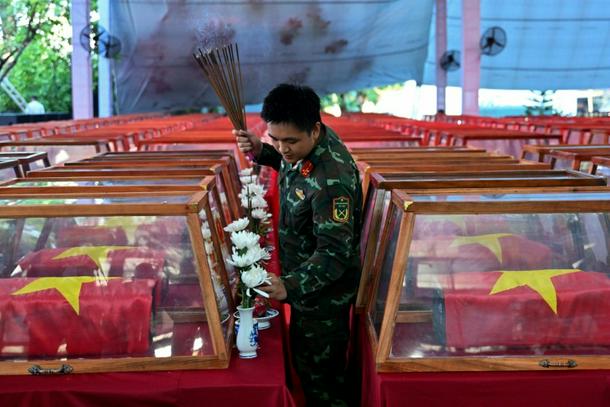
Tens of thousands of people lined the streets of Ho Chi Minh City, some holding white flowers or praying as buses carrying terracota caskets covered by Vietnam’s national flag moved in procession to a cemetery for fallen soldiers on the outskirts of the city.
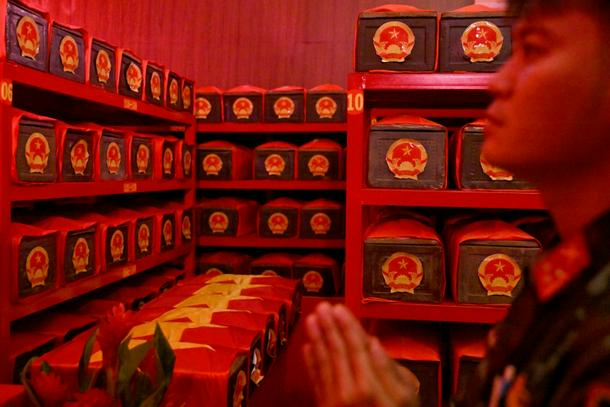
A soldier stands in prayer inside a room housing the remains of fallen soldiers at Le Thi Rieng Park in Ho Chi Minh City
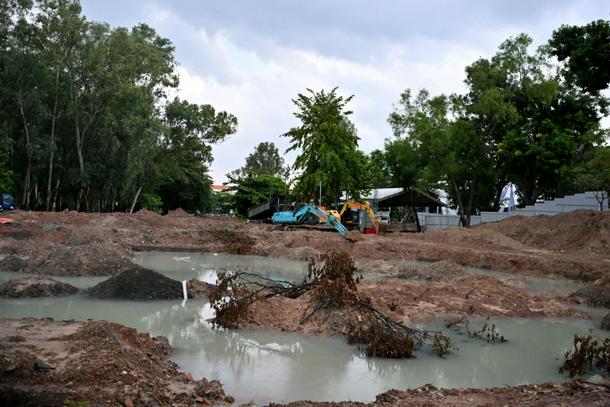
The 731 sets of remains, taken from individual and mass graves of fighters killed when US-backed forces crushed an uprising by communists in 1968, were exhumed from a tree-shaded public park, according to the military.
Le Ngoc Mai Uyen was a frequent visitor to the park named after her grandmother, revolutionary fighter Le Thi Rieng, before she realised her relative’s body may be buried there.
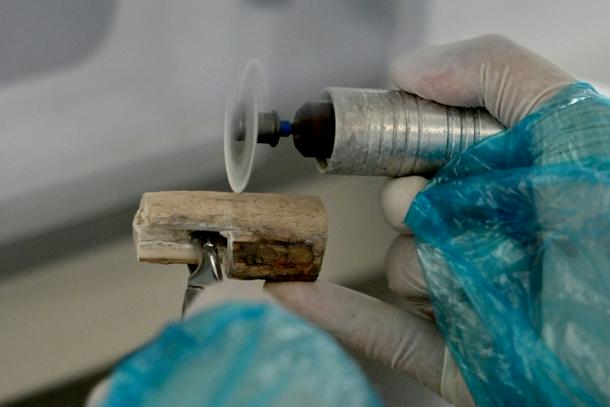
A staff member cuts a bone fragment from the remains of a fallen soldier at the Center for DNA Identification (CDI), which is part of the Vietnam Academy of Science and Technology, in Hanoi
“I have always felt something sacred here at this park,” the 36-year-old told AFP recently, after burning incense near a memorial plaque.
While she knew it was “extremely difficult”, Uyen said she has “strong faith” that the remains of her grandmother will be found.
The park was excavated as part of a 500-day national drive launched in March, touted as Vietnam’s largest push to locate some of the hundreds of thousands missing since the war.
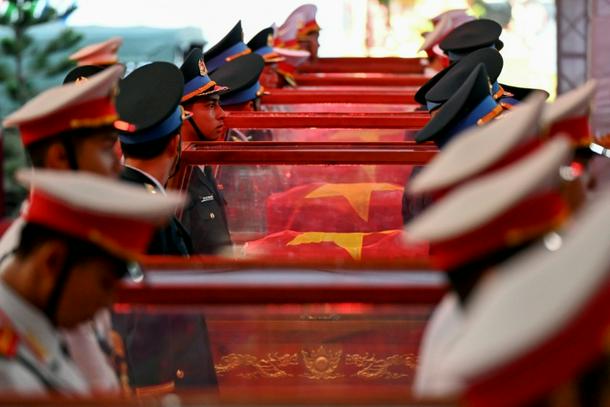
Vietnam held funeral rites for more than 700 of its war dead on October 14, unearthed in a major push to identify those missing from decades of conflict with France and the United States
Since July, hundreds of experts and soldiers have been working to unearth layers of remains at the park, aided by bulldozers, excavators and water pumps but often sifting through the mud by hand.
At the funeral service on Wednesday, patriotic songs blaring, the city’s deputy mayor Nguyen Manh Cuong said authorities “will not overlook any opportunity or method to continue the journey of searching for the fallen comrades”.
- Race against time -
“Due to the ferocity of the war and the passage of so much time, we have not yet been able to identify the names or hometowns of most of the soldiers recovered in this phase,” Cuong said.
There are 230,000 graves nationwide for unidentified soldiers in Vietnam
The government has announced the identity of one dead soldier, squad leader Huynh Van Quen who fought in 1968 and whose remains were found in Le Thi Rieng Park, according to state media.
Quen was identified in July thanks to a scrap of paper bearing his name that was found with his remains, and DNA samples that matched his relatives.
Up to 1.2 million Vietnamese soldiers are estimated to have been killed between 1945 and 1975, during wars involving former colonial power France, and then the United States as well as its allies.
Vietnam mourns hundreds of war dead as it tries to identify the missing decades after wars
There are 230,000 graves nationwide for unidentified soldiers, while thousands of others are believed to remain buried in remote jungles, or under farmland or other former battlefields.
The government aims to recover 7,000 sets of remains by July 2027, “a political task of special importance but also a command from the heart”, according to Deputy Prime Minister Pham Thi Thanh Tra.
More than 1,500 people have been deployed to search old battlefields in Vietnam, Laos and Cambodia – neighbouring countries drawn into the war – alongside thousands more engaged in data collection and analysis.
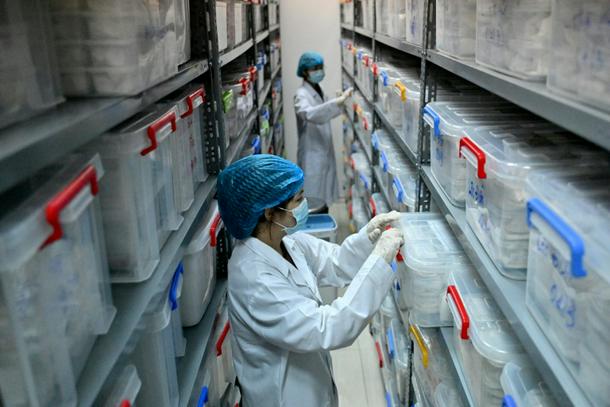
Staff members check boxes in the sample storage room for the remains of fallen soldiers at the Center for DNA Identification (CDI) in Hanoi
They are collecting samples from the 230,000 unidentified graves as well as conducting DNA analysis on 18,000 samples of remains and setting up a genetic database of their next of kin.
Colonel Trinh Tung Lam, part of the project’s command team, said their task was not easy, but it was the “right” time for this “most special and humane” effort.
In a lab at the Center for DNA Identification in Hanoi last week, technicians carefully cut into bone fragments separated from remains to extract samples for DNA analysis.
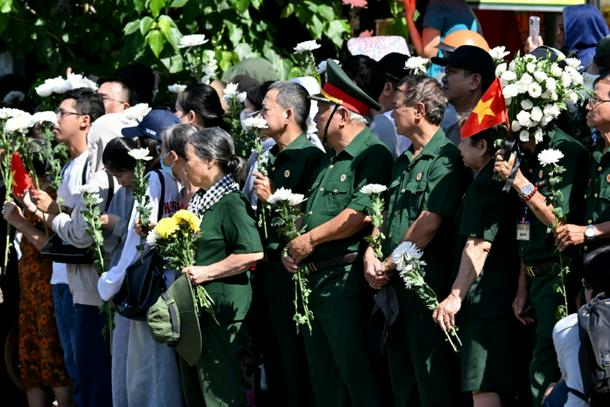
People gather with flowers by a roadside as they wait for the vehicles transporting the remains of fallen soldiers to pass by in Ho Chi Minh City
Director Tran Trung Thanh told AFP the state institution had acquired and developed “a world-first process for handling remains that have undergone severe degradation”.
Using US-funded technology through the International Commission on Missing Persons, a pilot programme had reported genetic data was successfully pulled from 54 of 58 samples, he said.
But he warned the process was “lengthy” – and they were in a race against time.
- ‘Final hope’ -
“As the surviving relatives and close kin of the fallen age and pass away, we risk losing a vital source of reference data,” Thanh said.
There are 230,000 graves nationwide in Vietnam for unidentified soldiers, while thousands of others are believed to remain buried in remote jungles, or under farmland or other former battlefields
Meanwhile, “the remains continue to decompose under natural conditions”, he said, making it harder to extract DNA.
For many, finding their loved ones has been a lifetime’s work.
Doan Van Cong, 68, and his family spent years touring cemeteries and talking to witnesses to discover what happened to his uncle, who died in 1950, when he was in his early 20s.
They believe he was among communist combatants buried in a mass grave 50 kilometres (30 miles) from his home after an ambush by French troops.
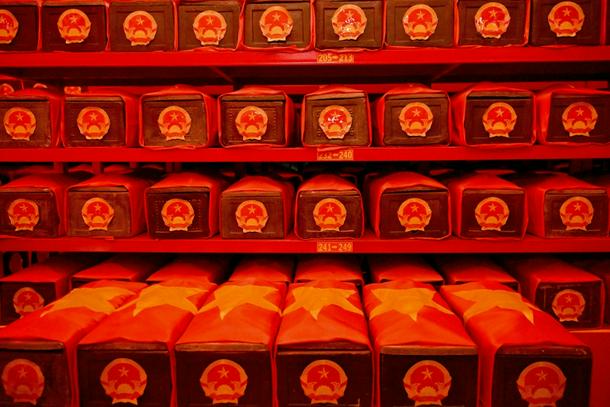
Hundreds of remains, taken from individual and mass graves of fighters were exhumed from a public park in Vietnam
But “there were no opportunities to excavate” the suspected sites, he told AFP.
Now, Cong said, the government drive for answers is his “final hope”.