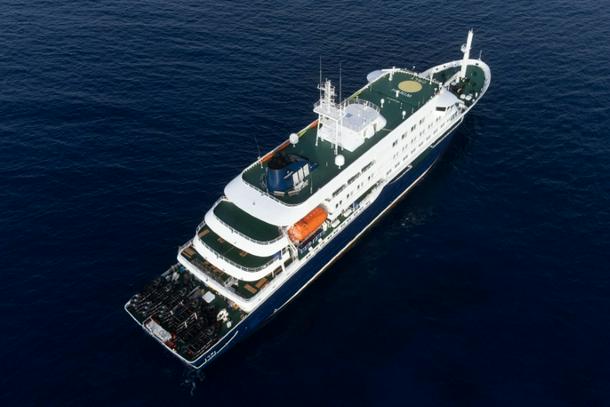
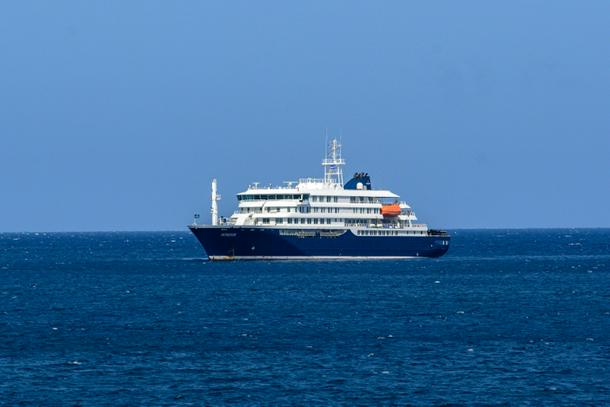
An outbreak of hantavirus has occurred on the Dutch-flagged polar expedition cruise ship MV Hondius
Praia (Cape Verde) (AFP) - Two seriously ill crew members on a cruise ship stricken by a deadly hantavirus outbreak will be evacuated via Cape Verde to the Netherlands, allowing the vessel to sail on to Spain’s Canary Islands, the operator said Tuesday.
Spain’s health ministry said the ship was due to arrive in the Canaries in “three to four days” but did not specify the port.
“Once there, the crew and passengers will be duly examined, cared for, and transferred to their respective countries,” it said.
The health ministry said the World Health Organization had explained that the Canary Islands were “the closest place with the necessary capabilities” medically.
The MV Hondius has been at the centre of an international health scare since Saturday, when the WHO was informed that the rare disease – usually spread from infected rodents typically through urine, droppings and saliva – was suspected of being behind the deaths of three of its passengers.
As others fell ill, passengers and crew have been in isolation after Cape Verde authorities barred the ship from docking.
The ship is anchored just off the island nation’s capital Praia.
The Dutch operator Oceanwide Expeditions indicated Tuesday that a solution was in sight, with plans to evacuate two sick crew members to the Netherlands for “urgent medical care”, along with a third person who had been in close contact with a German passenger who died on Saturday.
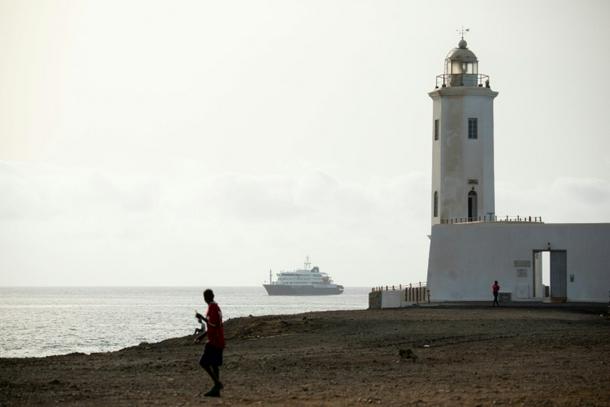
The MV Hondius could be seen from Praia, the capital of Cape Verde, anchored outside the harbour
The WHO also said medical evacuation plans were under way.
Once the evacuation has taken place, MV Hondius “can continue its route”, Ann Lindstrand, the WHO’s representative in Cape Verde, told AFP.
Oceanwide Expeditions meanwhile said its plan was for the ship to sail north “to the Canary Islands, either Gran Canaria or Tenerife, which will take three days of sailing”.
- ‘Complicated’ -
The cruise, which set sail from Ushuaia in Argentina on April 1 destined for Cape Verde, counted 88 passengers and 59 crew members, with 23 nationalities onboard, the WHO said.
One of the dead, a Dutch woman, had left the ship at the Atlantic island of Saint Helena and had flown to Johannesburg where she died on April 26.
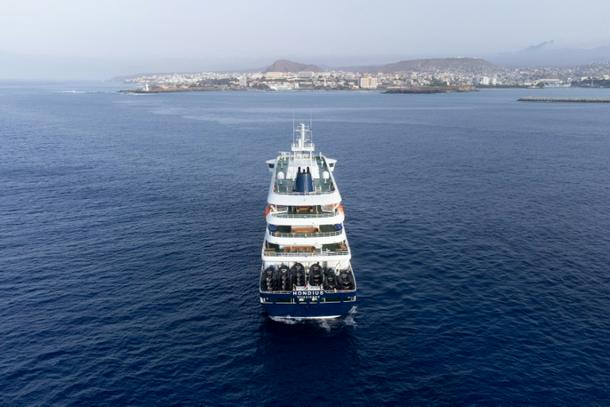
The MV Hondius sailed from Ushuaia in Argentina to Praia in Cape Verde, where it is anchored off the coast
Two hantavirus cases have been confirmed – including in one of the fatalities and a British passenger currently in intensive care in Johannesburg – with five further suspected cases, the WHO said.
Three of those seven have died; the one in Johannesburg was critically ill, and three still on board had reported milder symptoms, including one who is now asymptomatic, it said.
The WHO was trying to deduce how hantavirus had appeared on the ship, with the first person who died having developed symptoms on April 6.
Human-to-human transmission has only been reported in previous outbreaks of one specific hantavirus called Andes virus, which circulates in South America.
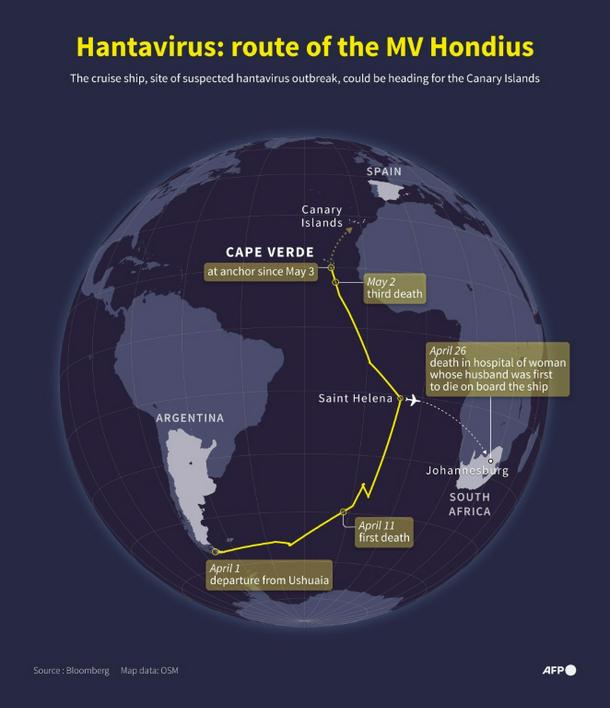
Hantavirus: route of the MV Hondius
WHO epidemic and pandemic preparedness and prevention director Maria Van Kerkhove told reporters the virus species had yet to be confirmed, but highlighted that WHO had been told “there are no rats on board” the ship.
South African researchers were sequencing the data, said Van Kerkhove, who added that “our working assumption is that it is the Andes virus”.
“We do believe that there may be some human-to-human transmission that is happening among the really close contacts”.
- Contact-tracing -
The first two fatalities were a Dutch couple – a man who died on April 11 and his wife who died after she disembarked in Saint Helena to accompany his body.
The wife was suffering from “gastrointestinal symptoms” and “deteriorated” during a flight to Johannesburg on April 25, the WHO said. She died the following day.
Efforts are under way to trace people on that flight, which South African-based carrier Airlink said was carrying 82 passengers and six crew.
The initial infection may have originated before boarding the ship, given the incubation time
The South African authorities had asked the airline to notify the passengers that they must contact the health department, a representative, Karin Murray, told AFP.
Van Kerkhove said the typical incubation period for hantavirus was between one and six weeks, leading the WHO to believe that the Dutch couple, who had been travelling in South America, “were infected off the ship”.