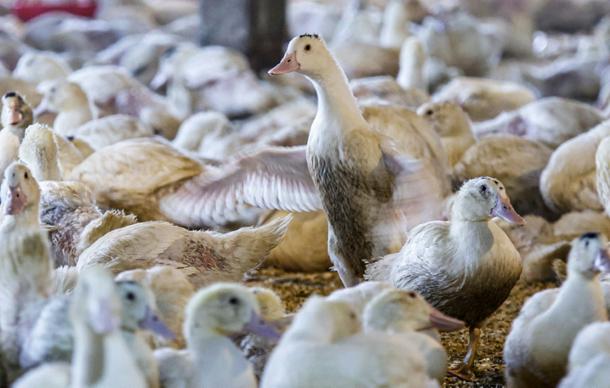
Voters in Washington DC will vote in November on a proposal to ban the sale of foie gras, the French culinary delicacy made from the enlarged livers of ducks
Washington (United States) (AFP) - Donald Trump could become a lame duck president after US midterm elections but prospects at the ballot box are looking brighter for ducks of the feathered variety.
When Washington DC residents vote in the November 3 congressional elections, with Trump’s Republican Party forecast to fare poorly, there will be an additional measure on the ballot: to ban the sale and distribution in the city of foie gras.
Animal rights activists collected the signatures of five percent of registered voters in the District of Colombia to mandate the referendum on the quintessentially French culinary delicacy that is made from the enlarged duck livers.
“They put a rod in a duck’s throat to make its liver get bigger. That’s not cool,” said campaign volunteer James Nance, referring to force feeding of fowl, as he stapled “Save the ducks” signs on lampposts on a busy uptown street.
Advocates are confident the measure will pass, although, as with a lot of politics in the nation’s capital, the debate on “Initiative 86” is rancorous.
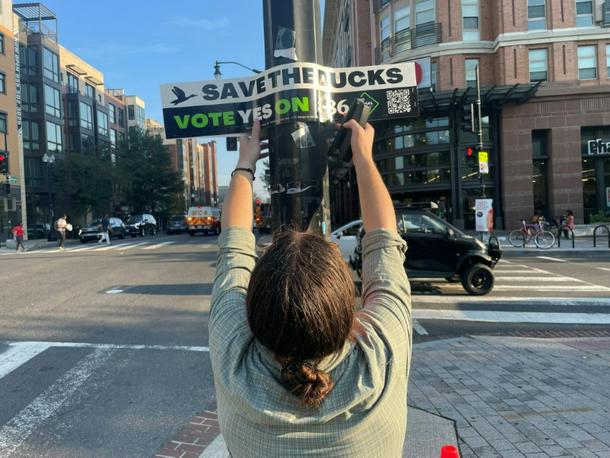
Mike Accardi, a volunteer with the animal rights group Pro Animal DC, which says the process of making foie gras in cruel as it involves force feeding ducks
The proposal – echoing the restaurant shorthand “86” for an item that is off the menu – pits zealous reformers against vested interests, with an electorate knowing little about the issue.
The most prominent opponent is Bart Hutchins, chef and owner of Butterworth’s, an upscale restaurant near Capitol Hill popular with Trump administration officials and supporters.
Foie gras is his favorite ingredient and a fixture on his menu – used in his tartare presentation, to mount sauces, as a pate, and even for ice cream.
Hutchins is pessimistic about staving off the ban and laments what it would mean for the city’s famed French restaurants.
“It’s this very modern thing where we just kind of keep throwing away the past,” Hutchins said.
“Next year it’ll be banning something else relatively small…until we’re all just eating, you know, chicken nuggets, and we’ll have no culinary heritage whatsoever.”
For the activists at Pro Animal DC, who are seeking to emulate places like California and Pittsburgh that have enacted laws against foie gras, it’s about fighting animal cruelty.
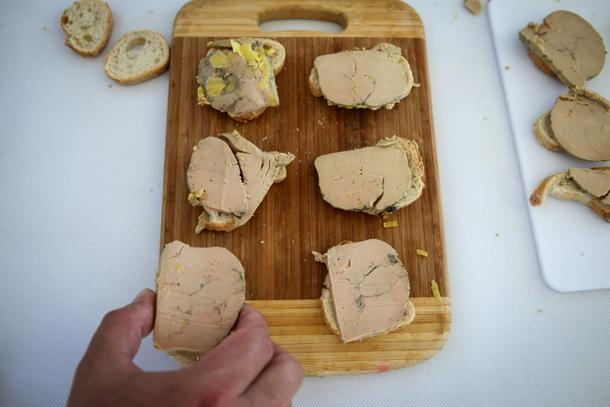
Opponents of the proposed ban on foie gras in Washington DC say the measure would be a blow to restaurants and French culinary tradition in the US capital
“DC is actually the third top consumer of foie gras in the entire country. So getting this cruel product out of DC would have a really big impact on the foie gras industry,” group spokeswoman Natalie Fulton said.
They gathered nearly 32,000 verified signatures to get “Initiative 86” on the ballot, which is more signatures than for a proposal to legalize cannabis approved in 2014.
They see voter ignorance as the main obstacle.
“A lot of people don’t know what it is, and that’s I think why it’s been allowed for so long, despite how cruel it is,” said activist and tech worker Mike Accardi.
- Who decides the menu? -
Jordan Grinor, director at one of only two US commercial foie gras producers, Hudson Valley Farms, strongly disputes the charge of cruelty.
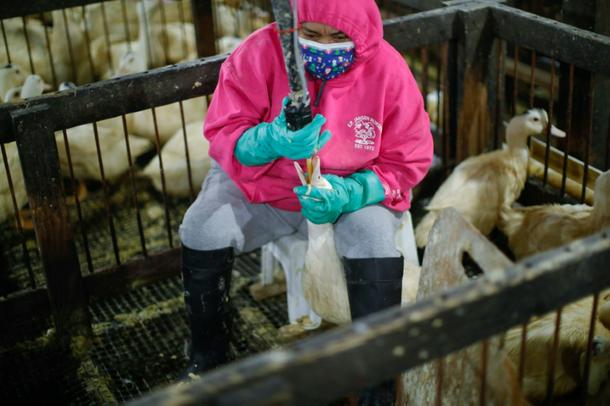
An employee feeds a duck at Hudson Valley Foie Gras in Ferndale, New York, on March 3, 2023, one of the two commercial producers of foie gras in the US who dispute claims of animal cruelty
He said that in the wild, ducks gorge before migration and store fat in their livers and argues that “gavage” – the process of force-feeding – is a traditional means of animal husbandry.
“Should governments have the power to say what we’re allowed to eat? That’s really the question here,” he said, adding that a DC ban could put at least a third of his 150 foie gras employees out of work in upstate New York.
The economic impact on Washington restaurants would probably be less marked, but Hutchins – who last year faced a social media barrage in the liberal city for hosting Trump luminaries at Butterworth’s – voiced disappointment that more of his gastronomic competitors are not speaking out against the proposed ban.
“A lot of chefs are being very quiet about this, and I understand that because they’re sort of scared of the protesters,” he said.
- Meat, yes. Foie Gras? No -
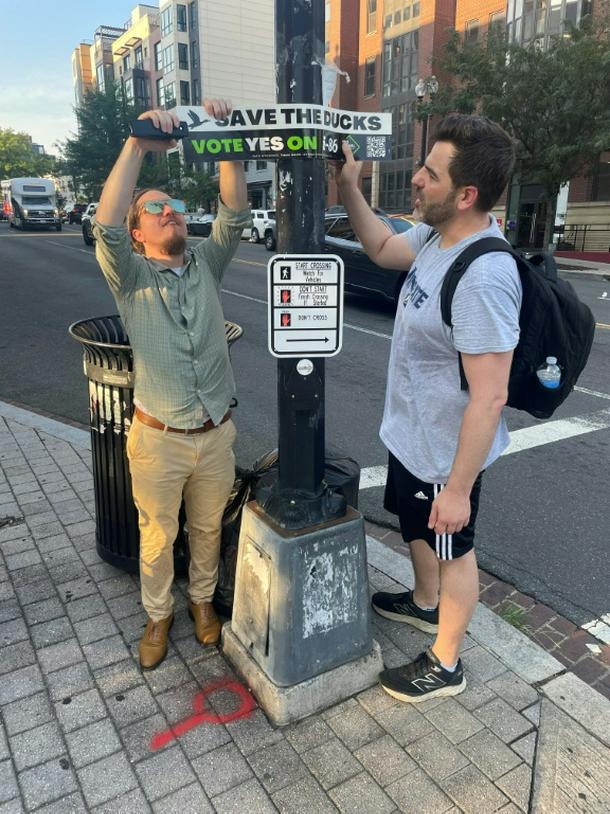
Mike Accardi (L) and James Nance (R), put up signs in Washington DC to raise awareness of the November ballot measure
The amiable campaigners AFP accompanied on a recent sign-posting spree on Washington’s uptown Georgia Avenue, did not match the profile of angry activists. They included two vegans and unusually, a dedicated carnivore.
Nance, a lawyer who regularly posts pictures of his favorite meat dishes on Instagram, is definitely in a minority in a heavily vegetarian movement, but says it’s worth campaigning for.
“There are more pressing issues like defense of democracy, like standing up to the (Trump) administration’s encroachments on democracy” but since the ban is on the ballot, “I figured I might as well help out.”