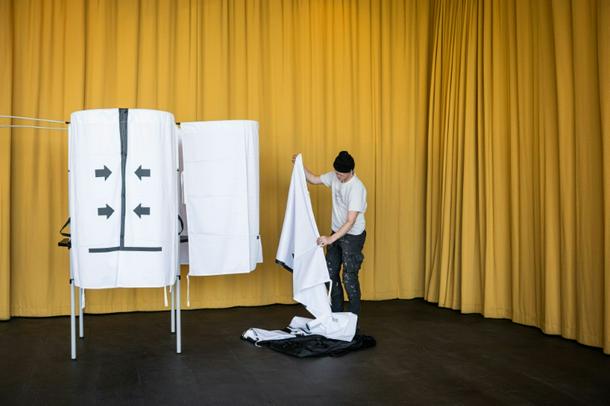
Voters are being asked whether Iceland should resume EU accession talks
Reykjavik (AFP) - Icelanders voted Saturday in a referendum on whether to resume membership negotiations with the European Union, expected to be a tight race that will be closely watched in Brussels.
“I think that we should be a part of a bigger unity. I think it’s worth looking into it,” Unnur Jokulsdottir, a 71-year-old retiree, told AFP after casting her ballot in Reykjavik’s City Hall.
In contrast, Olafur Thorsson, a 53-year-old fish trader, said he was sceptical.
“I used to like the European Union back when it was a good thing. But today it’s become a sort of big economic prison,” he told AFP.
The country of just under 400,000 people applied to join the EU in the wake of a 2009 financial crisis that devastated its economy.
Membership talks were then suspended in 2013 when a eurosceptic government came to power.
Thirteen years later, the referendum result is expected to go down to the wire, with a poll by analyst firm Maskina on Friday giving the ‘Yes’ a slight edge with 50.4 percent of the vote, a gap within the statistical margin of error.
“This has been a tight race, extremely exciting,” Social Democratic Prime Minister Kristrun Frostadottir said after casting her vote in the capital.
She added that the campaign had “lifted discussions about the EU, about Iceland’s place in the world, about our general geopolitical situation and status to a higher level.”
Debates have mainly revolved around domestic and economic issues, even if rising international tensions, with the war in Ukraine and US President Donald Trump’s ambitions for neighbouring Greenland, have featured in discussions.
Voting began at 9:00 am (0900 GMT) and closes at 10:00 pm. With no exit polls and given the tight race, the first reliable results are only expected late Saturday at the earliest.
- A better deal -
The around 273,000 voters are being asked to answer ‘Yes’ or ‘No’ to the question: “Should Iceland resume accession negotiations with the European Union?”
If the ‘Yes’ side wins, an accession agreement would be negotiated with Brussels and then put to a new referendum on actual membership.
The issue of fisheries – a pillar of Iceland’s economy and over which Reykjavik wants to retain exclusive control – would have to be hammered out with Brussels, which this time around appears more willing to compromise.
A ‘Yes’ would give Iceland “a stronger position when we are going to negotiate with the European Union,” Foreign Minister Thorgerdur Katrin Gunnarsdottir, a staunch proponent of resuming negotiations, told AFP.
“They better get us a good deal,” she added.
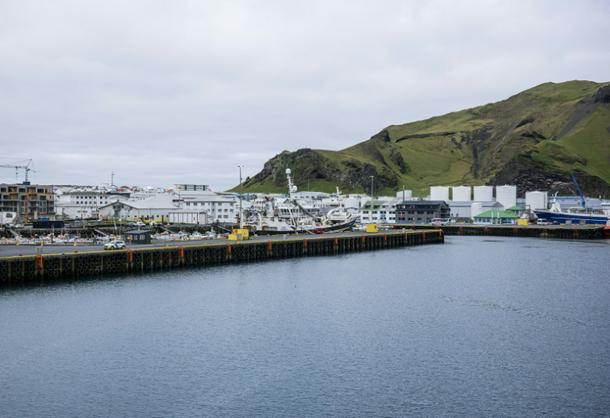
Fishing would be a big issue if talks are to resume
With Iceland’s economy now flourishing, some voters see no reason to discuss EU membership, since the country already has access to the single market as a member of the European Economic Area.
The flip side of Iceland’s regained prosperity is soaring inflation and interest rates.
Some households are paying nine percent interest on their mortgages, making the prospect of joining the eurozone – with its much lower rates – very appealing.
“I have children and nobody can buy a house because it’s too expensive,” Bryndis Magnadottir Munka, a 55-year-old tour guide, told AFP as she arrived to vote dressed in Iceland’s national costume.
“We’re not voting yet if we’re going to do it or not, it’s just to see what they have to say. And I want to see what they have to say,” she added.
Meanwhile, for 79-year-old retiree Julius Rafnsson the ‘no’ wins out “because I’m thinking of my country”
- Strategic location -
On the global stage, the return of war in Europe with Russia’s invasion of Ukraine has shaken established security doctrines.
Trump’s unpredictability and his threats to take over neighbouring Greenland – which he has mixed up with Iceland on several occasions – have added to Icelanders’ concerns.
Their island is strategically located in the sub-Arctic, has no military and depends on NATO and a 1951 bilateral agreement with the United States for its defence.
The result of the vote will be followed closely by the EU, which has not welcomed a wealthy, net contributor to its budget since 1995.
Brussels would see Icelandic membership as an example of positive enlargement that could also make it more palatable for member states to agree to take in poorer countries like Montenegro – or even help change some minds in ultra-wealthy non-EU member Norway, which could end up finding itself isolated.