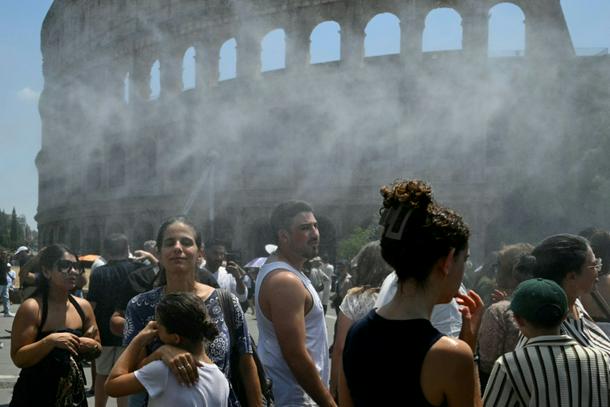
People tried to cool down under a nebuliser in Rome
Berlin (AFP) - Street parties and music festivals were cancelled and alcohol sales limited in parts of western Europe on Friday, as a deadly heatwave choking 150 million people with temperatures above 35C was forecast to shift eastwards.
Health authorities in Britain and France warned hospitals were struggling with the heat and a surge in emergency calls.
Germany saw its highest temperature ever recorded on Friday at 41.3C, according to preliminary weather service data, as the country braces for the possibility of an even hotter weekend.
Spain has reported scores of heat-related deaths and France has said dozens have drowned, along with several infants who have died in hot cars.
The UK and Switzerland both set new June highs, reaching 37.3C in eastern England and 38.8C in Basel, according to their weather agencies.
The reactors at Europe’s oldest nuclear plant were also shut down, its Swiss operator said, after the heatwave sent temperatures soaring in the river used for cooling.
While the heat eased slightly on Friday in some parts of western Europe, countries further east are warning the worst is yet to come.
The Czech Republic and Hungary were on red alert for the weekend, with temperatures of up to 40C forecast.
Balkan countries were also bracing for a tough few days.
Scientists have shown that recurring heatwaves are a clear marker of global warming driven by humans burning fossil fuels – and are set to become more frequent, longer and more intense.
- Heat dome -
“I do just want to stick my face in the ice bucket,” said Will Evans, 37, who runs a street-food outlet in London.
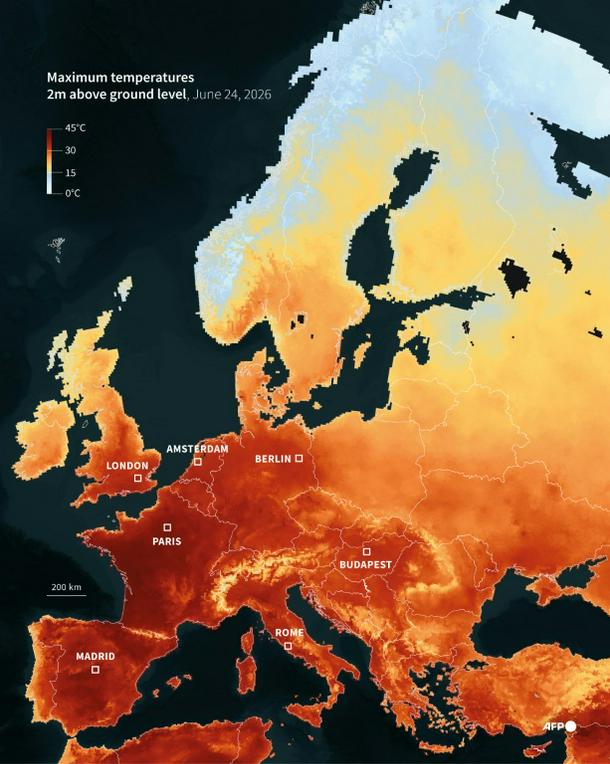
Infographic with a map showing maximum temperatures at 2 meters above ground level, recorded in Europe on June 24, 2026, based on MARSMet data from the European Drought Observatory (EDO)
“It’s been slow, slow all week. We rely a lot on office worker lunches, so with them staying home, it’s quieter for us.”
The authorities across Europe have been recommending people work from home when they can.
The hot weather was down to a “heat dome” of trapped air from north Africa, said Samantha Burgess, deputy director of the EU’s Copernicus Climate Change Service.
Climate scientist Friederike Otto, co-founder of World Weather Attribution (WWA), told reporters the weather pattern itself was “not particularly unusual”.
“But the temperatures are – or at least they used to be, without human-induced climate change,” he said.
- ‘Saturation point’ -
At least 150 million people in Europe were expected to experience temperatures above 35C on Friday, according to AFP calculations based on forecasts.
Maximum temperatures were forecast to exceed 30C for more than 420 million people across Europe, excluding Turkey – around 70 percent of the population.
London Ambulance Service said Wednesday’s extreme heat had led to the highest number of life-threatening emergency calls in a day.
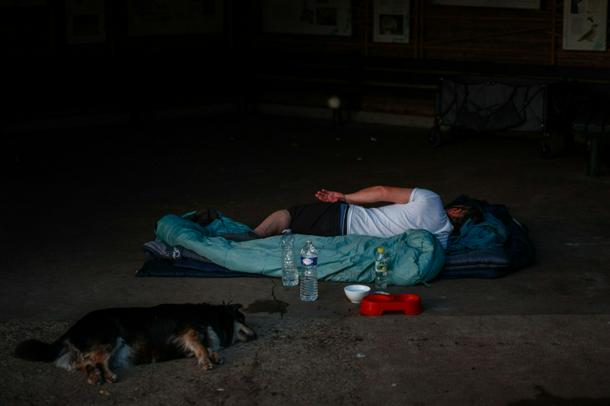
Parisians slept in parks
France saw a fourfold increase in heat-related hospital visits and a surge of cardiac arrests, the health ministry said.
“We are reaching a saturation point in hospital facilities,” Paris police chief Patrice Faure said, announcing a rare ban on evening alcohol sales in Paris over the weekend.
Organisers of the Pride March in Paris said they had postponed the event, scheduled for Saturday afternoon, one of many events called off in Europe.
- Heatwave heads east -
A storm broke the heat overnight in France’s western region of Brittany, bringing some respite on Friday.
“I’ve come back to life. We can breathe at last,” said local woman Aurelie Sauvager, 47.
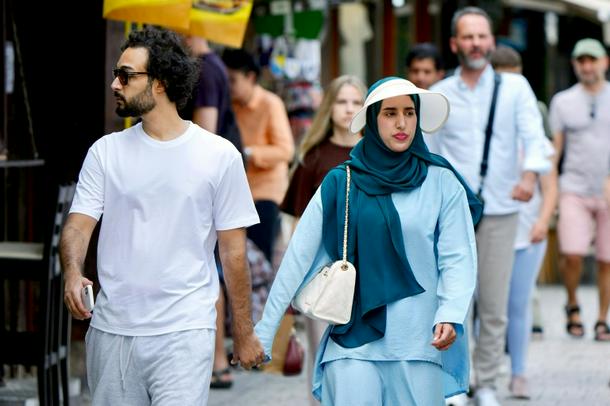
Balkans cities including Sarajevo were braced for the heat
But much of the Netherlands remained under red alert, with authorities advising people to travel only if necessary and most schools closed.
Organisers cancelled the four-day techno music festival Defqon.1 in the central Netherlands.
Slovakia forecast temperatures up to 36C. Swimming pools in Bratislava announced extended opening hours and authorities deployed tanker trucks of drinking water.
Hungary’s Prime Minister Peter Magyar said authorities were preparing millions of bags of drinking water for possible public distribution and urging residents to conserve water.
While eastern Europeans were not planning to cancel events – Budapest’s Pride March will be going ahead, along with a massive political rally in Serbia – locals were not so keen on the idea of leaving their homes.
Majlinda, 41, rushed was rushing through Kosovo’s capital Pristina stocking up on medicine before the weekend, shielding herself from the sun with an umbrella.
“I want to stock up on everything I need so I don’t have to go out tomorrow or the day after,” she told AFP.
burs/rh/ach