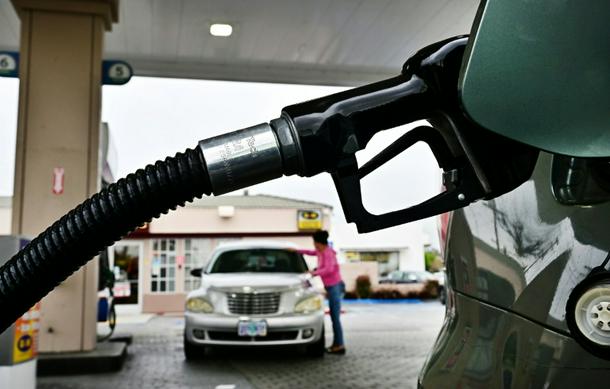
Energy prices have surged in the wake of the Iran war, but April's inflation also saw significant contributions from food and other categories
Washington (United States) (AFP) - Consumer inflation in the United States hit a three-year high in April, with the economic fallout of US President Donald Trump’s Iran war rippling through the world’s largest economy.
The consumer price index (CPI) rose 3.8 percent year-on-year, up from March’s 3.3 percent figure, the US Bureau of Labor Statistics (BLS) said on Tuesday.
Affordability has been a key political concern for Trump, and the stubbornly high prices – fuelled by energy costs and roiled supply chains due to the war as well as new US tariffs – will pile pressure on his Republican Party ahead of November’s midterm elections.
The US-Israel war on Iran has engulfed the Middle East in violence since late February, with Iranian retaliatory action targeting Washington’s regional allies and virtually blocking the Strait of Hormuz.
Roughly a fifth of the world’s oil and natural gas passes through the waterway under normal circumstances, and the blockade has sent worldwide energy prices surging.
In April, the US price index for energy rose 17.9 percent compared to a year ago, BLS data showed, by far the largest price jump for any category.
Food prices were up 3.2 percent in April over last year, the data showed, with groceries also rising at their highest rate since 2023.
Core consumer price index (CPI) inflation, which excludes volatile food and energy prices, came in at 2.8 percent year-on-year in April, up from 2.6 percent the month before.
A defiant Trump insisted on Tuesday that the inflation spike was “short-term.”
“As soon as this war is over, which will not be long, you’re going to see oil prices drop,” he told reporters in Washington.
- ‘Shock at the pump’ -
US consumers have been battered by years of higher-than-expected inflation, with policymakers struggling to achieve price stability more than five years after the pandemic began.
Trump made bringing inflation down a key promise since taking office, but has made little progress in doing so.
High fuel prices will be a core concern for voters. The average price of a gallon of regular gasoline has risen 51 percent since the start of the war, according to the AAA motor club.
Bernard Yaros, lead US economist at Oxford Economics, warned that high wholesale gasoline prices suggested that pump prices would again lift headline inflation next month.
“Consumers aren’t only facing sticker shock at the pump, but also with their utility bills as electricity prices rose sharply last month,” he said.
On Tuesday, Democratic Senator Elizabeth Warren slammed Trump over the latest inflation figures.
“Donald Trump promised to lower costs ‘on day one.’ Instead, he keeps raising them. First, his chaotic tariffs drove prices higher. Now, his war with Iran is pushing them up even more,” she said in a statement.
- ‘Worse before it gets better’ -
The US Federal Reserve has a long-term two-percent target for inflation and several policymakers at the central bank have indicated the possible need for interest rate hikes to address rising prices.
“Given that inflation is heading in the wrong direction and the labor market is holding up, it’s very unlikely that the Fed will be able to lower interest rates any time soon,” said Chris Zaccarelli of Northlight Asset Management.
He added that investors may begin to price in rate hikes for next year.
Kathy Bostjancic, chief economist at Nationwide, said April’s inflation figures were in line with expectations, but will likely “embolden” more Federal Reserve Open Market Committee (FOMC) policymakers to push for rate hikes.
“This would increase the hurdle for the Fed to cut rates later this year, despite Kevin Warsh coming on to lead the FOMC and being more inclined to argue for rate reductions,” she said.
Trump nominee Warsh is due to be confirmed as a member of the Federal Reserve board by the US Senate on Tuesday, with his confirmation as its chief due later this week.
Diane Swonk, chief economist at KPMG Economics, warned that the Iran war’s impact on the US economy was likely to get “worse before it gets better.”
“The closure of the Strait of Hormuz is more than an energy shock; it is roiling supply chains around the world in ways that echo the disruptions we saw during the pandemic,” she said.
“That suggests we could continue to feel its effects well into 2027, even if the strait were to reopen tomorrow.”